Add your promotional text...
Guided or Self-Guided? Choosing the Journey That's Right for You
Every traveller explores the world differently. This article compares guided and self-guided tours, explaining how each approach shapes the travel experience and why thoughtful planning, curiosity, and the freedom to explore can become part of the journey itself.
A-Z LiteraTours
7/9/20265 min read


Guided or Self-Guided? Choosing the Journey That's Right for You
Why the best way to explore a destination depends less on the itinerary than on the kind of traveller you are
Every traveller has experienced the same moment.
You arrive in a city you've dreamed of visiting. The streets are unfamiliar, the architecture is captivating, and around every corner there seems to be another discovery waiting to be made. How should you explore it?
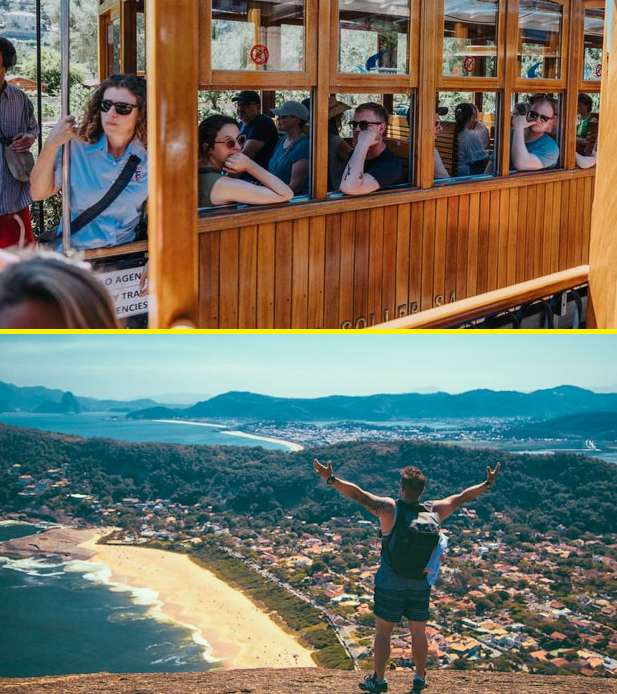
For some, the answer is obvious. Join a guided tour, listen to an experienced guide, and let someone else take care of the planning.
Others instinctively choose a different path. Armed with a carefully prepared itinerary, a map, and a sense of curiosity, they set off alone, free to follow their own interests and discover the city at their own pace.
Neither approach is inherently better.
They simply offer different ways of experiencing the same destination.
Understanding those differences can help you choose the kind of journey that will be the most rewarding—not only for your next trip, but for every adventure that follows.
What Is a Guided Tour?
Guided tours have long been one of the most popular ways to discover a destination, and for good reason.
An experienced guide provides historical background, local knowledge, and practical information that many visitors would never uncover on their own. Transportation, timing, and logistics are usually organised in advance, allowing travellers to concentrate entirely on the experience itself.
For first-time visitors, guided tours can be an excellent introduction to an unfamiliar city or country. They offer reassurance, efficiency, and the confidence that the most important sights will not be missed.
For many people, travelling with a group also adds a welcome social dimension. Conversations begin naturally, shared experiences create friendships, and exploring together often becomes part of the enjoyment.
There are, however, inevitable compromises.
The itinerary follows a fixed schedule. Time at each location is carefully managed, and the pace is determined by the group rather than by individual curiosity. If one place captures your imagination while another leaves you indifferent, you may have little choice but to move on with everyone else.
For many travellers, this structure is exactly what they want.
For others, it can feel surprisingly restrictive.
What Is a Self-Guided Tour?
Self-guided travel is sometimes misunderstood as simply wandering without a plan.
In reality, the best self-guided journeys combine careful preparation with complete personal freedom.
Instead of following a guide, travellers follow a thoughtfully researched itinerary designed to help them discover places independently. The research has already been done. Routes have been planned, locations identified, and practical information gathered.
What remains is the freedom to experience it all on your own terms.
Rather than removing guidance altogether, a self-guided tour simply changes its form. The expertise is still there—it is just delivered through maps, notes, recommendations, and carefully prepared directions instead of a person leading the group.
The traveller remains in complete control.
Freedom or Convenience?
Perhaps the greatest difference between guided and self-guided travel lies in the balance between convenience and flexibility.
A guided tour removes many decisions from the traveller. Where to go next, how long to stay, and how to reach the next destination have already been arranged. For many people, that is exactly what makes travel relaxing.
Self-guided travel takes a different approach.
The planning has been completed in advance, but the traveller decides how the day unfolds.
Pause to admire a beautiful square.
Spend an extra hour inside a museum.
Stop for coffee in a quiet café simply because it looks inviting.
Or continue walking because curiosity leads somewhere unexpected.
The schedule belongs to you.
There is another difference that is rarely mentioned. Preparing an independent journey is often an experience in itself. Many travellers genuinely enjoy spending evenings exploring maps, reading about destinations, comparing routes, studying photographs, and uncovering the stories behind the places they hope to visit.
Rather than seeing planning as a task, they see it as the first chapter of the journey—a gradual process of discovery that begins long before they leave home.
Time Becomes Part of the Experience
One of the quiet pleasures of independent travel is the freedom to linger.
Imagine arriving at a viewpoint overlooking the Amalfi Coast, a peaceful Venetian canal, or a secluded English village that inspired a favourite novel.
A guided group may remain for ten minutes before moving on to the next stop.
A self-guided traveller can stay as long as the moment deserves.
Sometimes the most memorable travel experiences are not planned attractions at all.
They are the conversations with local residents, the unexpected side streets, the hidden courtyards, or the simple pleasure of watching everyday life unfold from a café terrace.
These moments rarely appear on an itinerary. Yet they often become the memories we treasure most.
Curiosity Becomes the Guide
Perhaps the greatest gift of self-guided travel is that it encourages curiosity. Instead of asking,
"Where are we going next?"
travellers often begin asking,
"I wonder what's around that corner."
That subtle change transforms the experience.
Rather than following someone else's pace, travellers begin following their own interests.
A forgotten alleyway, an old bookshop, an unexpected church, or a small museum may become the highlight of the entire journey simply because there was time to explore. For travellers interested in literature and cinema, this freedom can be especially rewarding.
The places connected with a novel or a film are rarely limited to one famous landmark. They often include ordinary streets, quiet cafés, overlooked buildings, or landscapes that reveal their significance only to those willing to slow down and look more carefully.
Technology Has Changed Independent Travel
Not long ago, independent travel required paper maps, phrase books, handwritten notes, and a willingness to become lost from time to time.
Today, travelling independently has never been easier.
Smartphones provide reliable navigation almost everywhere. Translation apps help bridge language barriers. Digital tickets, online reservations, and offline maps simplify many practical aspects of travel that once demanded careful preparation.
Technology has not replaced the pleasure of discovery.
It has simply made independent exploration more accessible than ever before.
Travellers can now enjoy the freedom of exploring on their own while benefiting from tools that previous generations could scarcely have imagined.
Which Style of Traveller Are You?
The answer is not the same for everyone.
If you enjoy meeting new people, appreciate expert commentary throughout the day, and prefer someone else to organise the logistics, a guided tour may be exactly what you are looking for.
If, on the other hand, you enjoy exploring at your own pace, value flexibility, and like discovering places that lie just beyond the obvious tourist routes, self-guided travel may feel far more rewarding.
Many experienced travellers discover that they enjoy both.
A guided tour can provide an excellent introduction to a destination, while independent exploration allows a deeper, more personal connection afterwards.
The two approaches are not competitors.
They complement one another.
Choosing the Journey That Suits You
Travel is deeply personal.
Some people enjoy the shared experience of discovering a destination together, guided by someone whose knowledge brings history and culture vividly to life. Others prefer the quieter satisfaction of exploring independently, allowing curiosity to shape the day and unexpected discoveries to become part of the story.
Neither approach is right for everyone.
The best journey is the one that matches the traveller.
For those who love books, films, and the stories behind remarkable places, self-guided travel offers a particularly appealing balance. It combines careful research with complete freedom, allowing travellers to experience destinations thoughtfully while following the narratives that first inspired them.
After all, every memorable journey tells a story.
Sometimes it is a story shared with others.
Sometimes it is one we discover for ourselves.
Continue the Journey
Ready to experience independent travel supported by careful research? Discover our self-guided literary and film tours, designed to help you explore at your own pace.
Click on the image to explore our literary and film tours: