Add your promotional text...

Shakespeare's London Taverns
Step into the lively world of Shakespeare’s London, where taverns were the creative crossroads of actors, poets, and playwrights. This article explores the inns the Bard likely visited — from Bankside haunts to Southwark coaching inns — and reveals how these bustling spaces shaped the early modern stage.
HISTORIC PLACES
A-Z LiteraTours
7/27/20268 min read
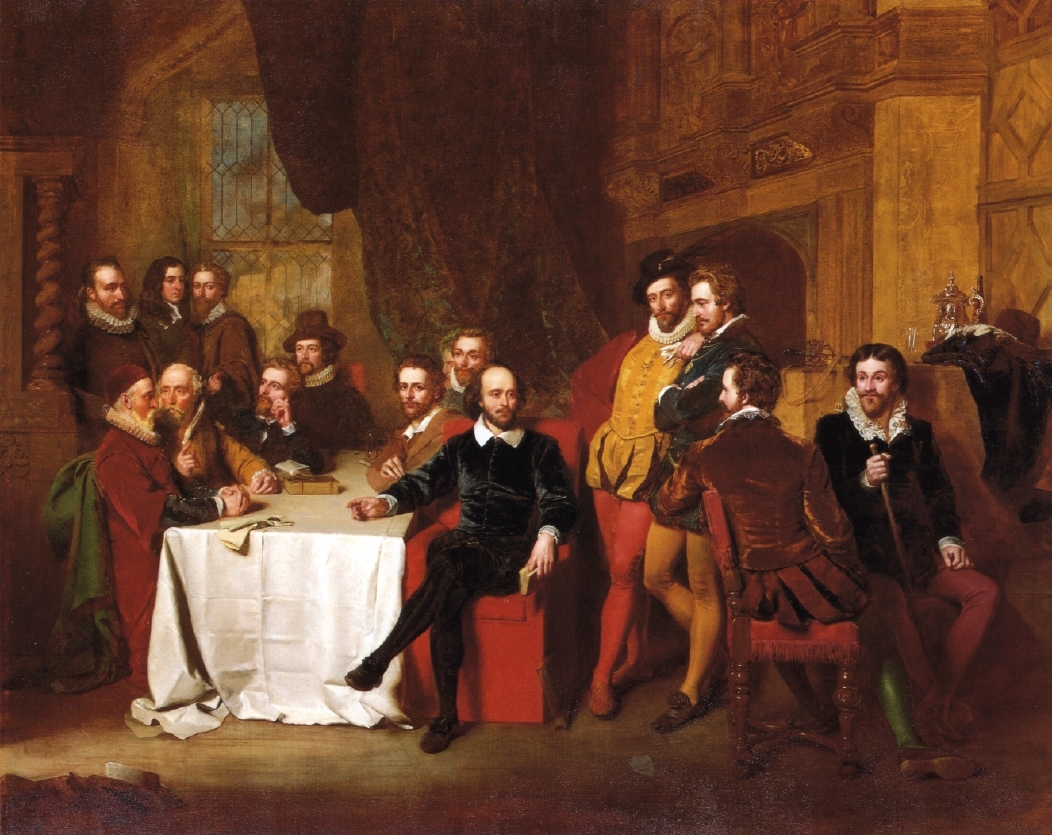
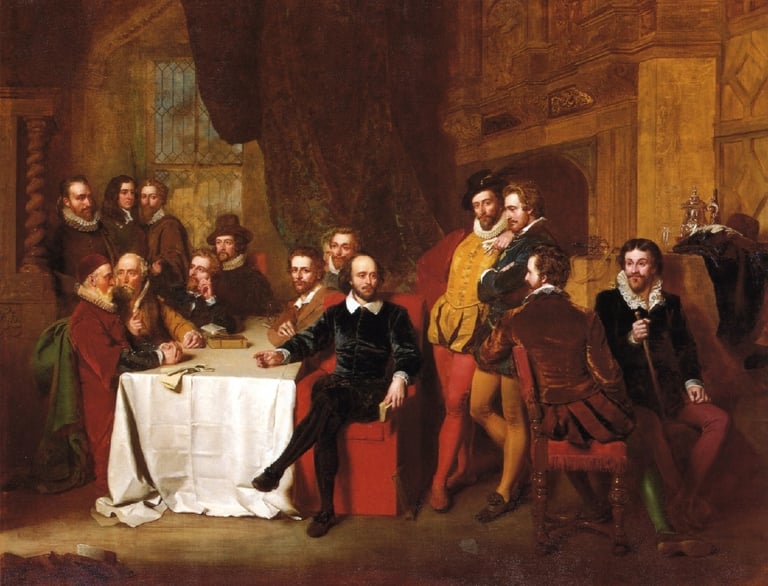
Shakespeare and his Contemporaries... John Faed, 1851
Image © Wikipedia — reproduced for analysis under fair dealing.
Shakespeare's London Taverns
Drink, Drama & Daily Life in the Bard’s City
London in Shakespeare’s day was a city alive with noise and colour — a place where the Thames carried merchant ships and refuse in equal measure, where bear‑baiting pits stood beside theatres, and where the taverns were the beating heart of social life. For the actors, poets, and playwrights who shaped the English Renaissance, these inns were more than places to drink. They were informal offices, rehearsal rooms, debating halls, and creative laboratories.
Shakespeare lived and worked in Southwark for more than a decade, and during those years he moved through a landscape thick with taverns. Some he almost certainly visited; others he may have known only by reputation. A few survive today, transformed but still echoing with the footsteps of the men and women who shaped the early modern stage.
This article explores the taverns most closely associated with Shakespeare — places where he may have shared ale with fellow writers, argued with Ben Jonson, or simply observed the human drama that fed his imagination. Some are gone, some remain, and all offer a glimpse into the world that shaped the greatest playwright in the English language
The Falcon Inn: Shakespeare’s Bankside Local
If one tavern can be called Shakespeare’s “local,” it is the Falcon Inn. Standing on Bankside, a short walk from both the Globe and the Rose theatres, the Falcon was a favourite haunt of actors, playwrights, and theatre‑goers. Its reputation is well documented: early modern sources list it among the taverns “frequented by Shakspere,” alongside Ben Jonson, Christopher Marlowe, John Fletcher, John Ford, and other luminaries of the stage.
The Falcon’s location made it ideal for the theatre crowd. Bankside in the late 16th century was a lively, unruly district — home to brothels, gambling dens, bear‑baiting arenas, and the great playhouses. It was outside the jurisdiction of the City of London, which meant that activities frowned upon by civic authorities flourished here. For Shakespeare and his colleagues, Bankside offered freedom, energy, and inspiration.
The Falcon itself was a substantial inn with a courtyard, galleries, and private rooms. It was the sort of place where actors could gather after a performance, where playwrights could argue over lines, and where patrons could mingle with the creative minds behind the plays they loved.
One famous anecdote — recorded by the 17th‑century writer Thomas Fuller — describes Shakespeare and Jonson engaging in “wit‑combats,” verbal duels of intellect and humour. Fuller does not name the tavern, but the Falcon is the most likely setting: close to the theatres, popular with writers, and known for its convivial atmosphere.
The inn no longer stands, but an 1805 engraving preserves its appearance: a handsome galleried structure typical of the period. Today, only the memory remains, but for visitors walking Bankside, it is easy to imagine Shakespeare stepping out of the Globe and crossing the street to the Falcon for an evening of ale and argument.
The Tabard Inn: A Rare Glimpse of Shakespeare Himself
If the Falcon offers strong circumstantial evidence, the Tabard Inn provides something rarer: a specific historical claim that Shakespeare was seen there.
The Tabard, located on Borough High Street, was already famous in Shakespeare’s day as the starting point of Chaucer’s Canterbury Tales. It was one of the great inns of Southwark, known for its long room, its carved wooden panels, and its bustling traffic of travellers heading south.
In 1643 — nearly thirty years after Shakespeare’s death — a visitor to the Tabard recorded an extraordinary detail: that Shakespeare, Fletcher, Burbage, Jonson, and other members of the theatrical world had carved their names into the wooden panels of the long room. The account is tantalizing. It is the only known claim of Shakespeare being seen in a specific tavern, and while it cannot be verified, it fits perfectly with what we know of his life and circle.
The Tabard burned down in 1676, and nothing of the original structure survives. Today, a plaque marks the site, quietly commemorating both Chaucer’s pilgrims and the playwrights who may have gathered there centuries later. For literary travellers, it is a place where imagination meets history — a reminder that Shakespeare moved through real rooms, touched real walls, and left traces that flicker through the historical record.
The George Inn: The Last Survivor
A short walk from the Tabard stands the George Inn, the only surviving galleried coaching inn in London. While there is no direct evidence that Shakespeare visited the George, the circumstantial case is strong. He lived and worked in Southwark for years; he knew the White Hart next door (he set a scene there in Henry VI, Part 2); and the George was one of the most prominent inns of its time, documented by the chronicler John Stow.
The George’s galleries — wooden balconies overlooking a central courtyard — are exactly the sort of architectural space that inspired the early theatres. Visitors today can still walk those galleries, imagining actors rehearsing lines or patrons gathering before a performance. The inn’s atmospheric interior, with its low beams and dark wood, offers one of the most tangible connections to Shakespeare’s London.
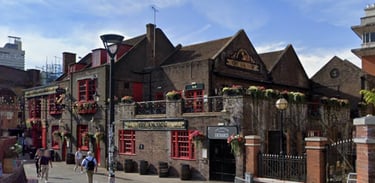
For modern travellers, the George is a highlight of any literary pub walk. It is a living building, still serving food and drink, still welcoming visitors, and still carrying the weight of centuries. Whether Shakespeare drank here or not, the George embodies the world he knew — a world of inns that were social hubs, creative spaces, and essential parts of London life.
The Mermaid Tavern: A Mythic Gathering Place
No discussion of Shakespeare’s taverns is complete without the Mermaid Tavern, even though its connection to Shakespeare is more myth than fact. Located in Cheapside, the Mermaid was famous as a meeting place for “men of wit,” including Ben Jonson, John Donne, and other poets of the early 17th century.
Later writers imagined Shakespeare among them, trading barbs with Jonson and dazzling the room with his intellect. While there is no historical evidence that he ever visited the Mermaid, the legend speaks to the cultural memory of Shakespeare as a man deeply engaged with the literary world around him.
The Mermaid does not survive, but its mythic status makes it a charming addition to any exploration of Shakespeare’s tavern life — a reminder of how the Bard’s presence has been woven into the fabric of London’s imagination.
Other Taverns of Shakespearean Tradition
Beyond the inns most firmly linked to Shakespeare, several other London taverns live in the realm of tradition, literary association, or long‑standing local belief. They may not offer documentary proof of the Bard’s presence, but they form part of the wider tapestry of Shakespearean London — places where history, imagination, and cultural memory intertwine.
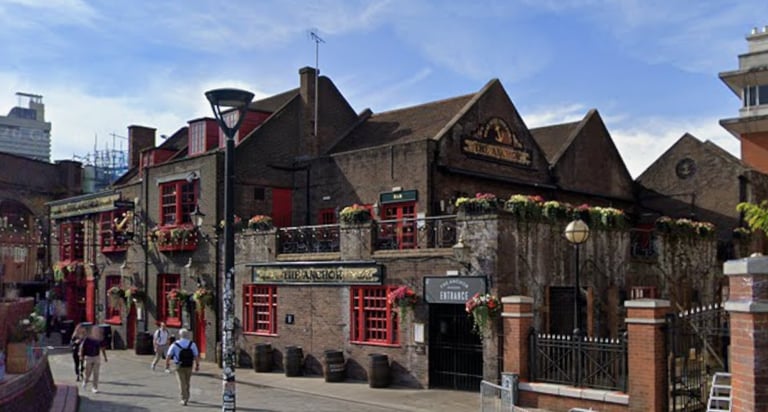
The Anchor, Bankside
A short walk from the site of the original Globe, The Anchor stands on a spot long associated with Bankside’s riverside taverns. The present building is largely Victorian, rebuilt after fires, but the location has housed inns since the early 17th century.
For generations, The Anchor has been cited as a place Shakespeare may have known. Its proximity to the theatres, its position along the busy waterfront, and its deep roots in the district’s tavern culture have made it a traditional favourite among those tracing the Bard’s London haunts. While no surviving record places Shakespeare inside its walls, the pub’s enduring presence on Bankside keeps it firmly within the constellation of Shakespearean lore.
The Boar’s Head Inn, Eastcheap
If The Anchor belongs to tradition, the Boar’s Head Inn belongs to Shakespeare’s imagination. This lively Eastcheap tavern appears throughout Henry IV as Falstaff’s raucous headquarters — a place of laughter, mischief, and late‑night revelry.
The Boar’s Head was a real tavern, well‑known in Shakespeare’s time, and its reputation for noise and merriment clearly inspired his depiction. Whether Shakespeare ever drank there is unknown, but the inn’s literary afterlife is undeniable. Today, the Boar’s Head survives only in name and memory, yet it remains one of the most vivid examples of how Shakespeare transformed the everyday spaces of London into enduring dramatic settings.
Ale, Tokens, and Tavern Culture
To understand Shakespeare’s taverns, one must understand the culture of drinking in early modern England. Ale was safer than water, and taverns were essential social spaces. They were places to eat, drink, conduct business, debate politics, and exchange ideas.
The Folger Shakespeare Library preserves a remarkable collection of tavern tokens — small lead or brass discs used as currency in inns. These tokens offer insight into the everyday life of taverns: their names, their symbols, their proprietors. They remind us that taverns were not just literary haunts but commercial enterprises woven into the fabric of London’s economy.
For Shakespeare, taverns were part of the world he observed so keenly. The humour, conflict, camaraderie, and chaos of tavern life appear throughout his plays, from the Boar’s Head in Henry IV to the bustling streets of Romeo and Juliet. Taverns were theatres of their own, full of characters who might step directly onto the stage.
Stratford-upon-Avon: The Taverns of Shakespeare’s Youth
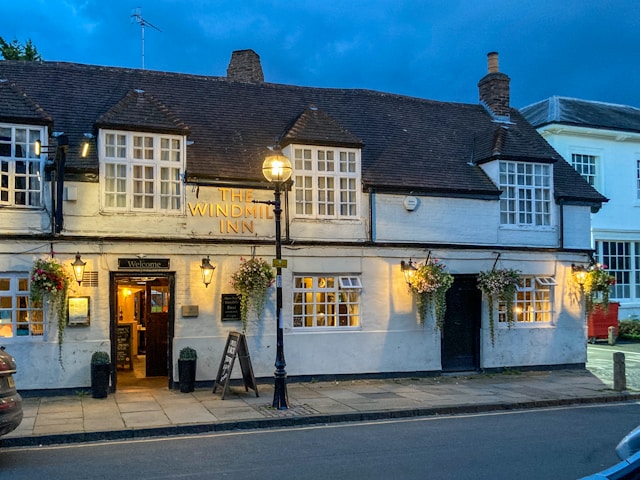
While London’s taverns shaped Shakespeare’s professional life, the inns of Stratford-upon-Avon formed the backdrop of his youth. The Old Thatched Tavern, dating to 1470, stood in the town during Shakespeare’s lifetime and remains one of Stratford’s most atmospheric pubs today. He would have passed it regularly, perhaps stopping in as a young man.
Nearby, the Church Street Townhouse sits opposite the King’s New School, where Shakespeare studied. Though the building has changed over the centuries, the location offers a glimpse into the daily world of the young playwright — a world of narrow streets, timbered houses, and local inns that formed the foundation of his early experiences.
These Stratford taverns provide a gentle counterpoint to the bustling, theatrical energy of Southwark. Together, they frame Shakespeare’s life: the quiet provincial beginnings and the vibrant London years that shaped his career.
Walking in Shakespeare’s Footsteps Today
For modern travellers, exploring Shakespeare’s taverns is a journey through time. Some sites, like the Falcon and the Tabard, exist only in memory and historical record. Others, like the George Inn, remain wonderfully alive. Together, they offer a way to experience Shakespeare’s world not through museums or monuments, but through the living spaces where he ate, drank, argued, and observed.
These taverns are woven into the fabric of London’s history, and they form a natural extension of A-Z LiteraTours’ Literary Pubs & Historic Haunts tour. Visitors can stand where Shakespeare stood, walk the streets he knew, and feel the atmosphere that shaped his imagination.
In the end, Shakespeare’s taverns remind us that genius is not born in isolation. It grows in conversation, in community, in the lively exchange of ideas over a shared table. The inns of London were part of Shakespeare’s creative ecosystem — places where the Bard found companionship, inspiration, and perhaps the occasional friendly argument.
And though centuries have passed, the echoes remain. Step into the George Inn, pause at the Tabard plaque, wander Bankside where the Falcon once stood — and you may feel, just for a moment, that Shakespeare is not so far away.
Many of these taverns feature on our Literary Pubs & Historic Haunts tour — a curated walk through London’s most atmospheric literary landmarks.
Click on the image below to view the Tour:
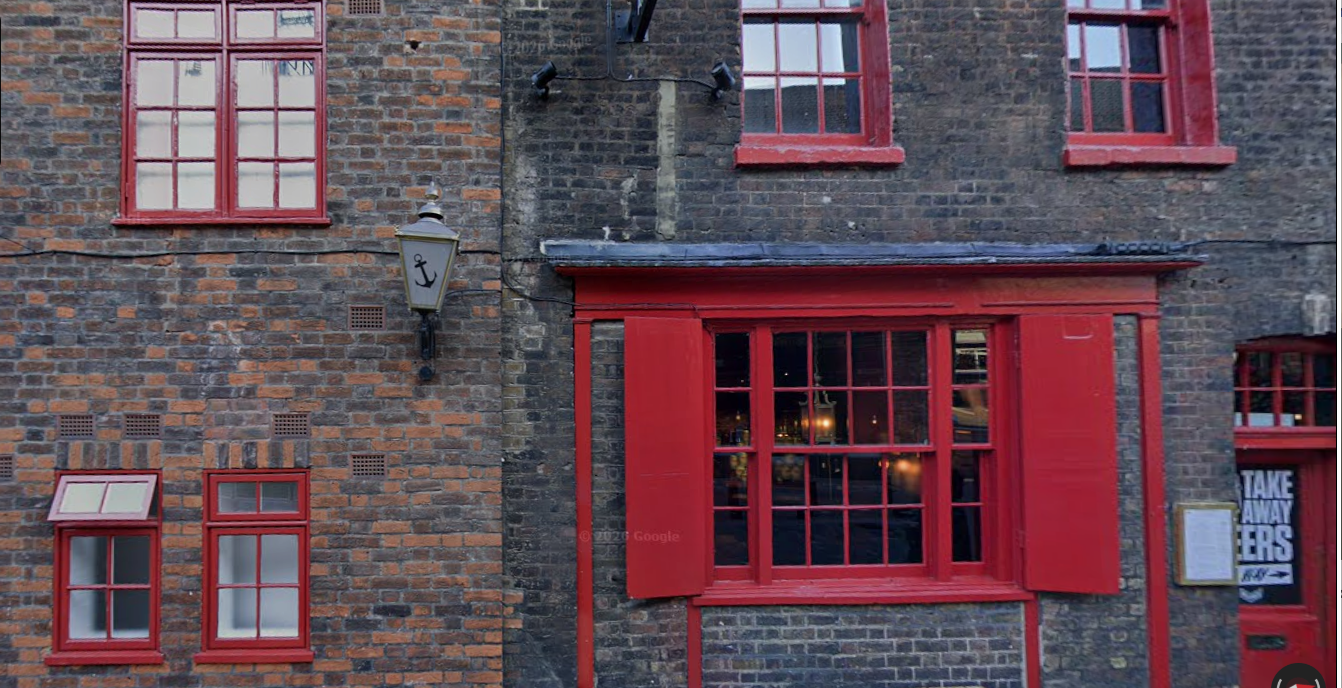
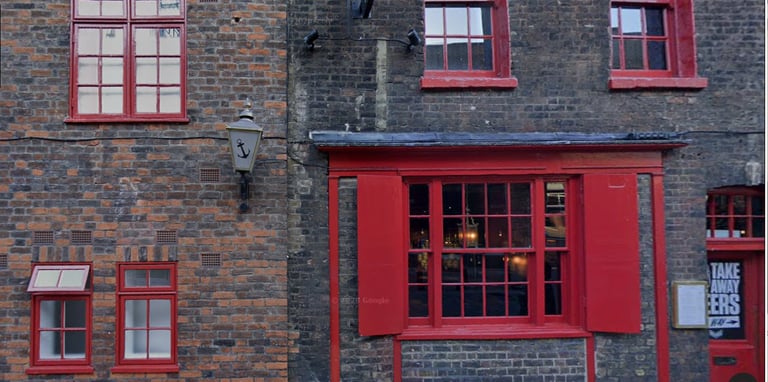
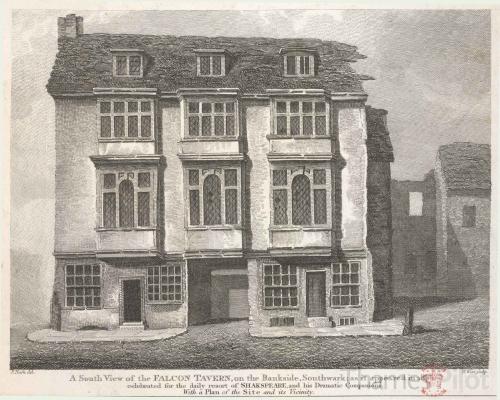
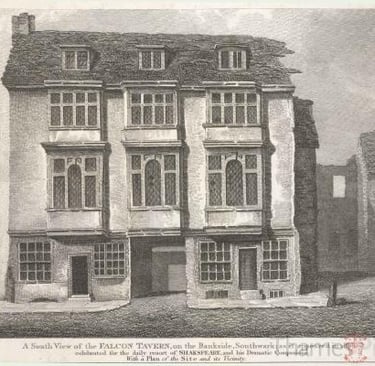
Image © The British Library Board — reproduced for analysis under fair dealing.
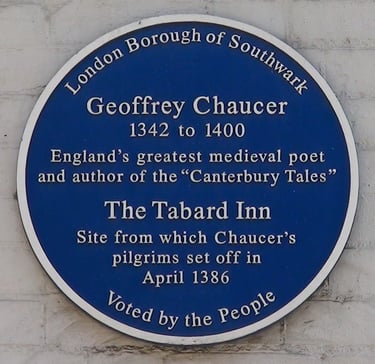
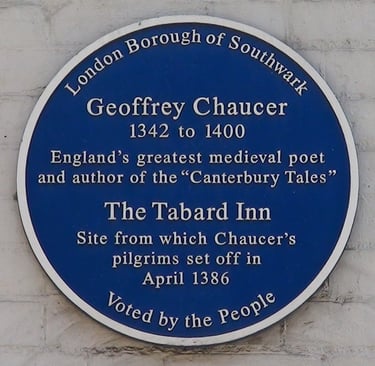
Image © London Remembers — reproduced for analysis under fair dealing.
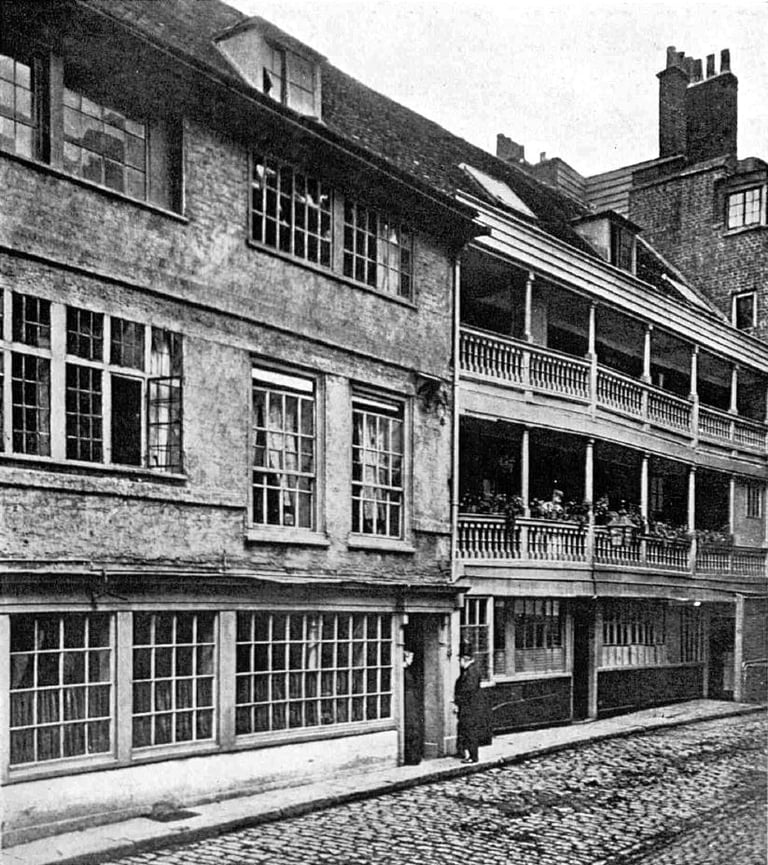
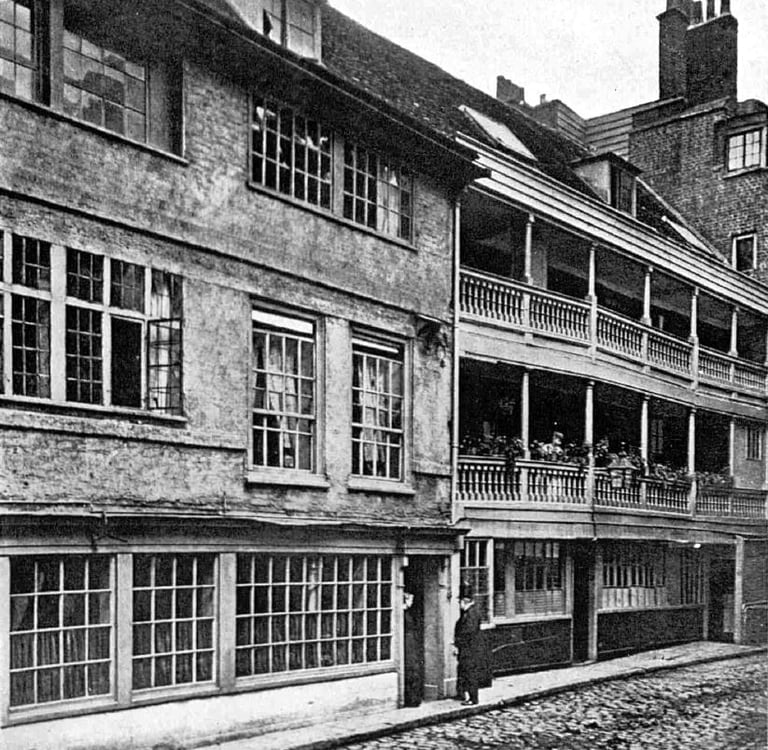
Image © alondoninheritance.com — reproduced for analysis under fair dealing.
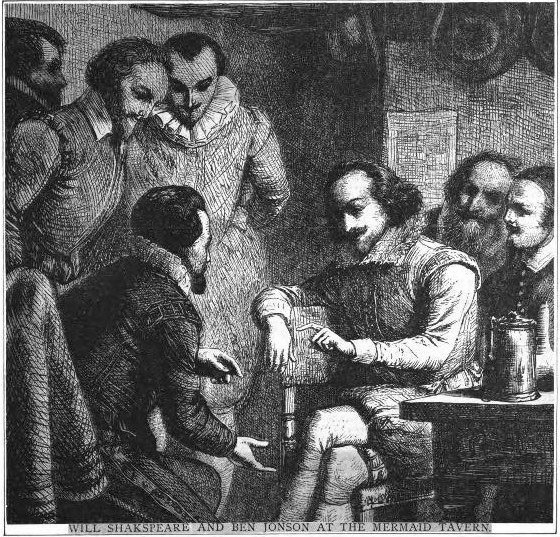
Shakespeare and Jonson debating at the tavern
Image © Wikipedia — reproduced for analysis under fair dealing.


Get in touch
Note: Our Social Networks links will be available soon
Film stills appearing on A‑Z LiteraTours are reproduced solely for critical commentary and educational analysis under Canada’s fair‑dealing framework. All rights to the original works remain with their copyright owners.

Click on the image below to see Terms & Conditions:
Cinematic & Literary Travel Experiences by A‑Z LiteraTours