Add your promotional text...

The Jackal’s Custom Rifle: Would de Gaulle Have Stood a Chance?
The Day of the Jackal’s custom rifle remains one of cinema’s most intriguing props — a weapon built for concealment, precision, and myth. This article explores its real‑world mechanics, design origins, and the ballistics behind Edward Fox’s legendary marksman scene, revealing how fiction and engineering intersect in one unforgettable film moment.
PROP ENGINEERING
Alex Zverev
7/24/20269 min read
The Jackal's Custom Rifle
The Jackal’s Custom Rifle: Would de Gaulle Have Stood a Chance?
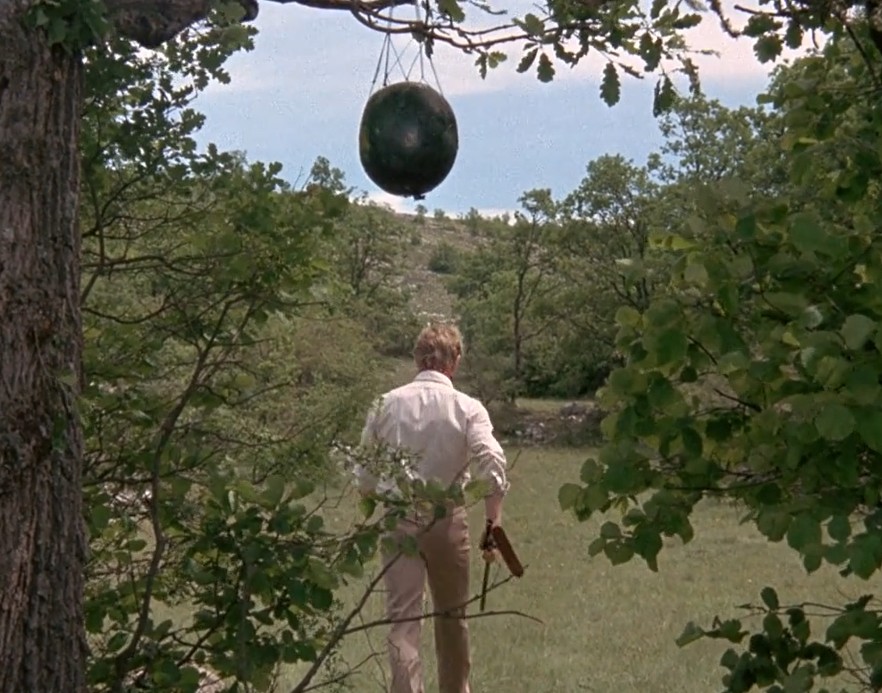
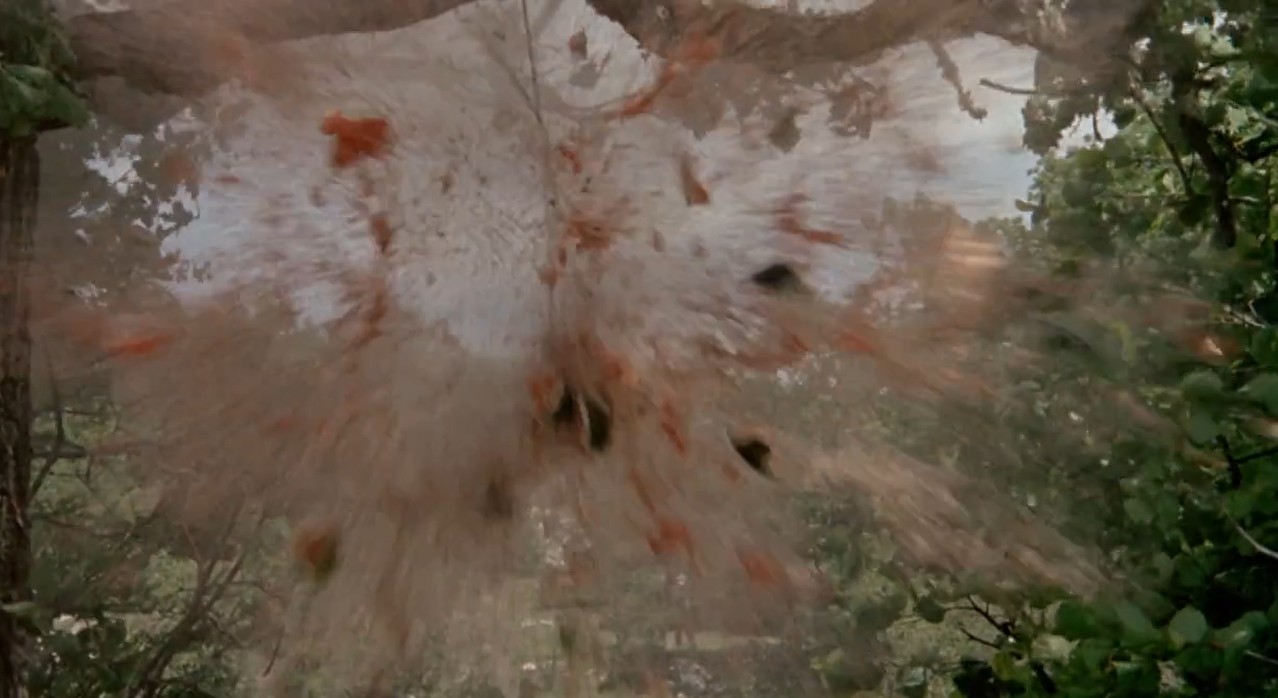
The custom rifle hidden inside a pair of crutches and smuggled across borders is one of the most memorable elements of The Day of the Jackal (1973). Sleek, compact, and ingeniously disguised, it blows a watermelon apart with an explosive bullet during the film’s test‑firing scene. But was it truly a serious enough firearm to threaten President Charles de Gaulle? What exactly was the Jackal armed with, and how plausible was this weapon in real ballistic terms?
This article examines the rifle, the ammunition, and the shot itself — and asks whether the Jackal’s equipment was realistically capable of doing the job.
The Gun Side of the Story
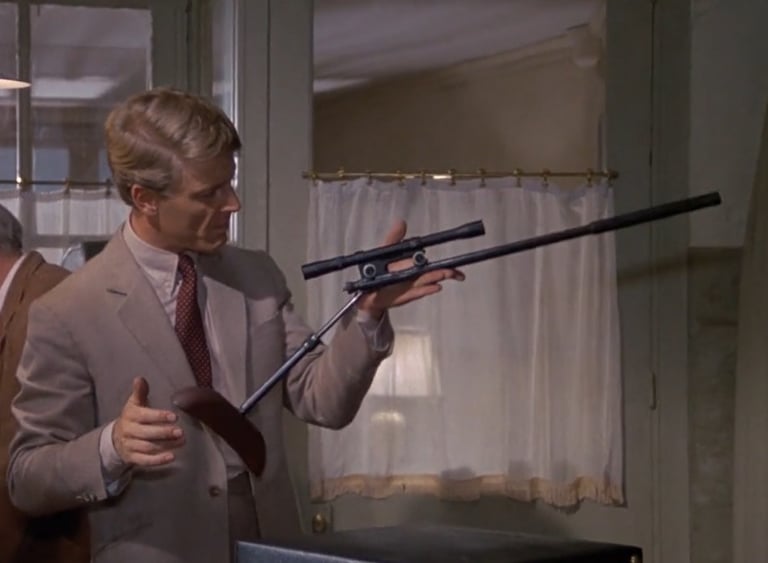
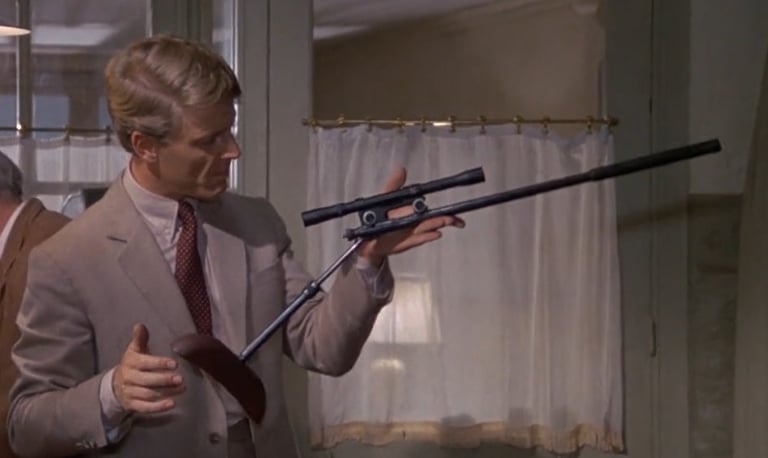
In Fred Zinnemann’s 1973 film, the Jackal commissions a custom takedown rifle — a weapon designed to be disassembled into two or more slender components for concealment. The rifle has an unusually thin profile and breaks down into several narrow cylindrical parts that fit neatly inside hollow crutches. In the film, the gunsmith is Italian (Belgian in Frederick Forsyth’s novel). He produces six explosive cartridges filled with mercury, along with additional training rounds.
The Jackal inspects the rifle’s exterior, checks the bolt movement, and later sights the weapon in the Monte Moro forest outside Genoa. He smuggles the gun into France, hiding it in his car’s exhaust system, and finally brings it to the shooting position concealed inside the crutches. He fires one shot at President de Gaulle — and misses when de Gaulle unexpectedly lowers his head.
This raises several questions: Was such a rifle realistically buildable? Was its design adequate? And was the chosen ammunition powerful enough at the actual shooting distance? The following sections explore these issues.
The Prop Rifle Facts
Here are the most reliable facts available about the physical rifle props used in the film.
Base rifle & modification (on‑screen story)
Likely based on an off‑the‑shelf sporting bolt‑action rifle, heavily modified by the gunsmith “Gozzi” (Italian in the film; Belgian FN engineer “Goosens” in the novel).
Stock removed, barrel shortened, bolt handle cut away so the rifle could break down into slim components.
Concealment design
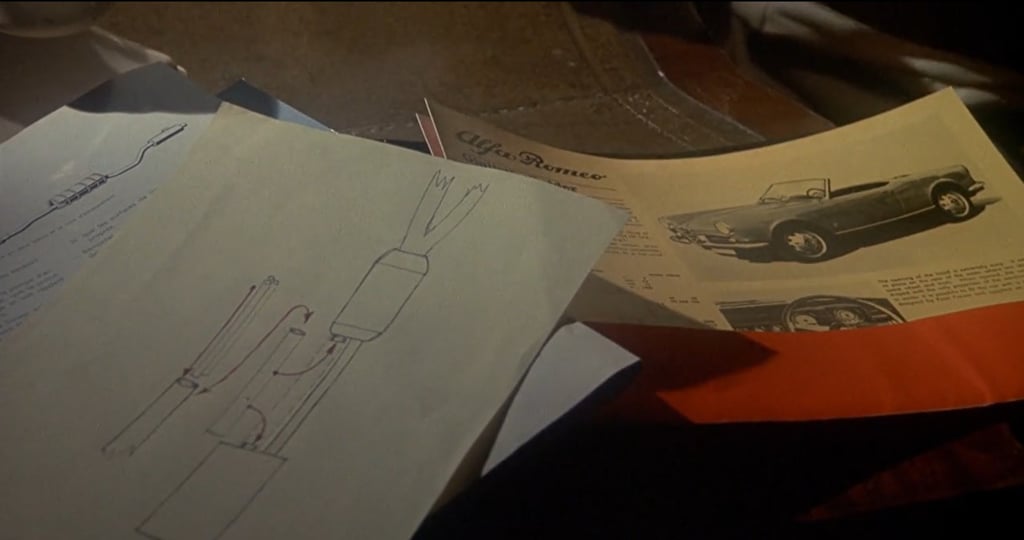
Built to fit entirely inside a pair of hollow crutches: barrel, receiver, suppressor, shoulder‑stock bar, and scope all disguised as crutch parts.
Six special explosive rounds prepared and displayed beside a box of converted standard ammunition.
Calibre (best‑supported but not fully settled)
IMFDB identifies the rifle as chambered in .22 Magnum (.22 WMR).
Some enthusiasts argue for .22 Hornet, but the on‑screen cartridges clearly lack the Hornet’s distinctive neck and larger size.
In both film and novel, the bullets are described as hollow‑tipped and filled with mercury, though the film shows round‑nose projectiles.
Number of rifles built for the film
Two working rifles were constructed.
They were genuine, functioning lightweight firearms capable of being concealed in crutches — not inert props.
Prop provenance
One rifle was handed over to British authorities after filming, likely due to its unusual design and capabilities.
The other is reportedly held by the Cinémathèque Française in Paris.
Real‑world maker
Public sources do not identify the actual armourer or gunsmith who engineered the working props.
Available trivia focuses on design and function rather than crediting a specific maker.
Replica and documentation trail
A fan‑made replica (signed by Edward Fox) has appeared at auction, confirming detailed measurements and takedown concept.
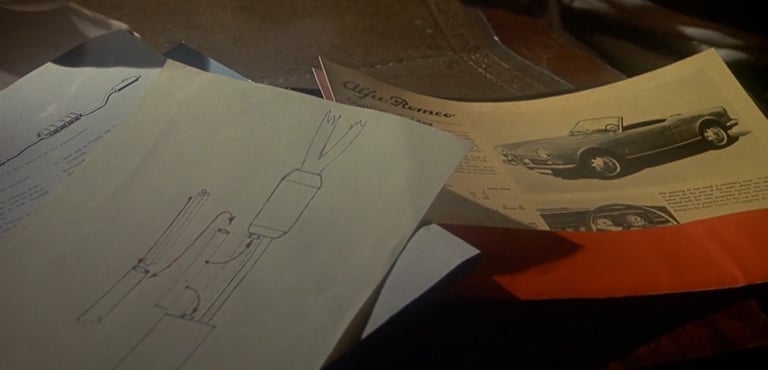
The Franklin Library edition of the novel includes a fold‑out diagram with semi‑canonical design details.
Ammunition Choice
A firearm’s effectiveness depends primarily on the ammunition it fires. The gun itself merely ignites the cartridge and directs the projectile; the cartridge determines:
· powder charge and type
· bullet mass
· muzzle velocity
· energy and momentum
· trajectory and bullet drop
· bullet shape and terminal behaviour.
Accuracy also depends on barrel condition, action quality, and bullet uniformity. Worn bores reduce accuracy, and poorly shaped bullets produce wider shot dispersion. Long‑distance shots require powerful ammunition with high‑quality bullets and consistent manufacturing.
What Cartridge Did the Gun Use?
Several scenes show the ammunition produced for the Jackal: six slim, cylindrical cartridges with silver‑coloured conical bullets. Their proportions strongly suggest .22 WMR (.22 Magnum).
Typical .22 WMR characteristics:
· Bullet weight: 30–50 grains (commonly 40 gr)
· Muzzle velocity: up to ~2,000 ft/s from a full‑length rifle barrel
However — and this is important — from a short 10‑inch barrel like the Jackal’s, velocity typically drops to ~1,450–1,650 ft/s, significantly reducing energy.
In the “Unwrapping cartridges” scene, the bullets appear slightly inconsistent in shape. This is likely due to prop fabrication rather than intentional design; real custom bullets would need to be perfectly uniform.
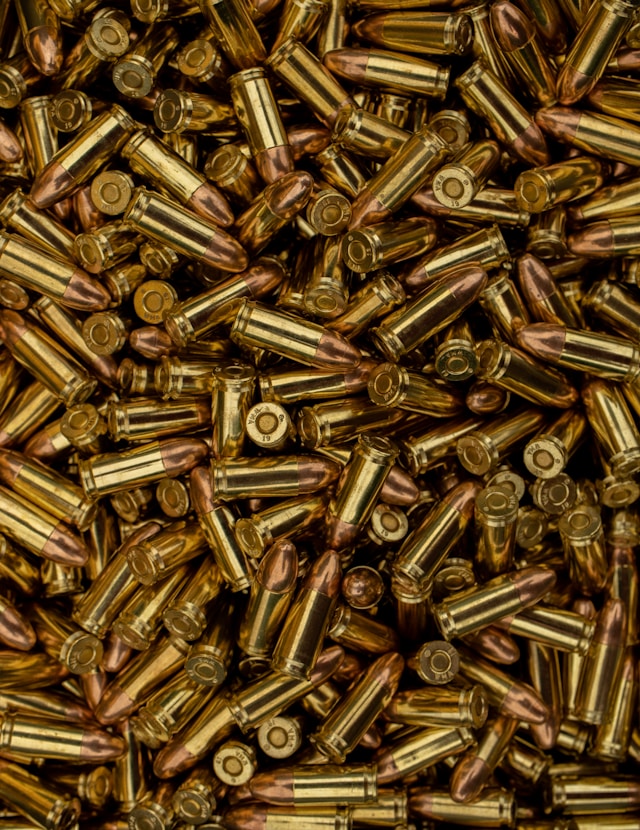
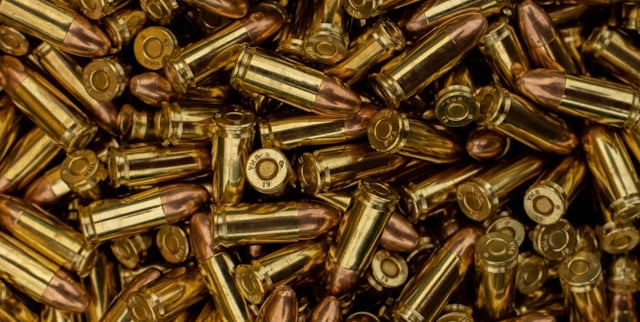
Some have proposed the 5.6×35R Vierling, an obsolete German rimmed cartridge derived from the .22 WCF. However, its subtle mid‑case taper would be visible on screen, and the Jackal’s cartridges appear fully cylindrical.
Verdict: .22 Magnum.
The Rifle
The Jackal’s takedown single‑shot rifle appears in several scenes, revealing its proportions and major components. While the film does not show fine detail, enough is visible to make reasonable assessments.
Barrel
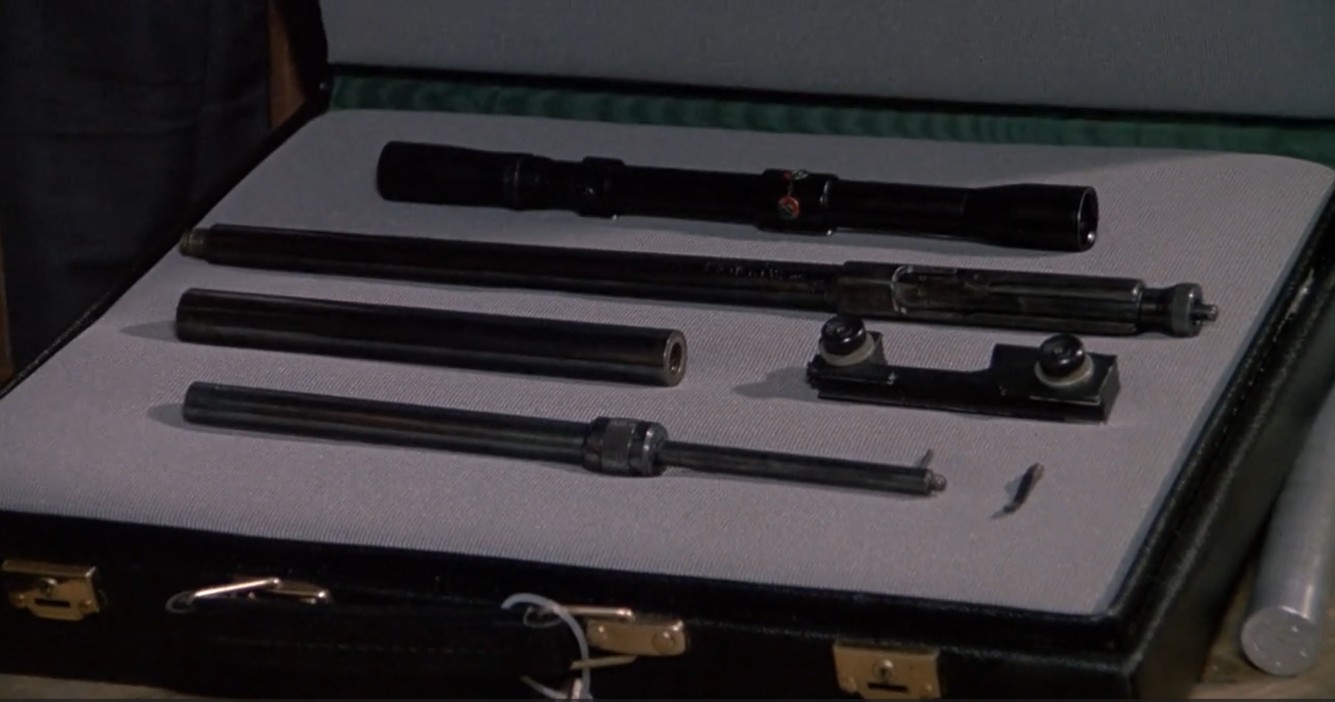
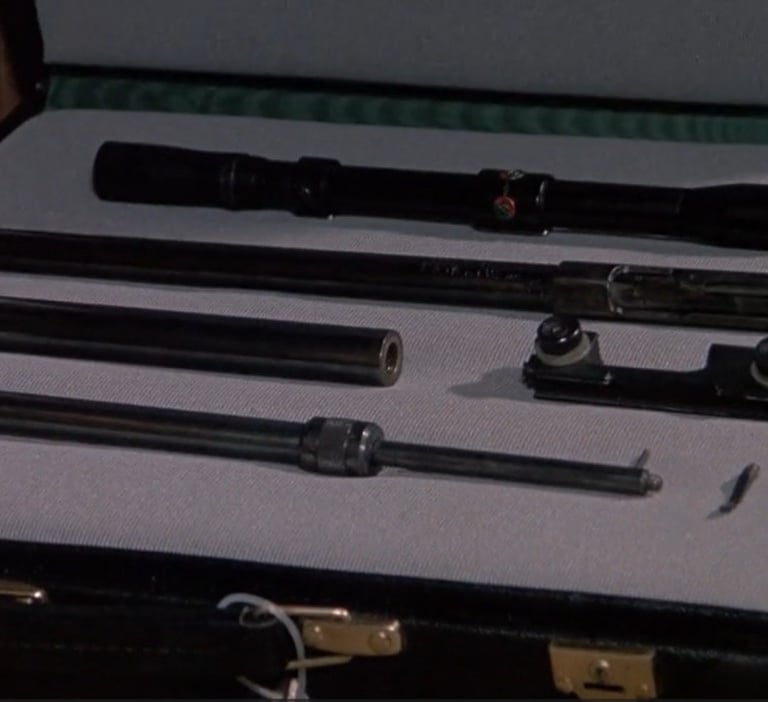
From the “Gun in the case” screenshot, assuming a typical attaché case width of ~17 inches (43 cm) and the barrel occupying ~60% of that width, the barrel length is approximately 26 cm (just over 10 inches).
This is short for long‑distance shooting. Carbines typically use 16‑inch barrels, and sniper rifles longer still. A 10‑inch barrel reduces velocity and makes precise aiming more difficult.
Action
The rifle’s action is extremely slim. The bolt lacks a traditional side handle; instead, it is operated by rotating and pulling the rear knob.
Some analysts suggest the action may have been taken from the BSA Sportsman .22, a post‑WWII bolt‑action rifle. Its receiver diameter is roughly 1 inch (2.5 cm) — consistent with the Jackal rifle’s estimated dimensions — and its bolt also features a similar rear knob.
This makes it plausible that the film’s armourers used an existing BSA action (and possibly a shortened barrel), re‑chambered for .22 Magnum. Re‑chambering would require deepening the chamber by roughly 1 cm, or fitting a .22 Magnum barrel to the action.
Telescopic Sight
One source identifies the scope as a 4×22 optic (4× magnification, 22 mm objective lens). This matches the on‑screen appearance and is reasonable for a compact takedown rifle. Professional sniper rifles use far more powerful optics — but they don’t need to fit inside crutches.
Could the Jackal Do It With This Rifle?
The previous sections laid out the rifle’s design, ammunition, and technical characteristics. Now we can address the central question: was the Jackal’s rifle truly the right tool for the job?
Concealment
On this point, the rifle performed flawlessly. The Jackal successfully hid the disassembled weapon in his car’s exhaust system and later inside the crutches. The takedown design, with its slim cylindrical components, allowed the gun’s elements to be distributed across different sections of the crutches without attracting suspicion. Concealment was the rifle’s strongest feature.
Shooting Distance
The Jackal told the gunsmith that the expected shot distance would be 400 feet (120 m). Analysis of the actual filming location — from the top floor of 150 Rue de Rennes to de Gaulle’s position on Boulevard du Montparnasse — shows a horizontal distance of approximately:
253 ft
77 m
85 yards
This is well within the Jackal’s initial estimate and comfortably inside the effective range of .22 Magnum — at least on paper.
Shooting From High Elevation
The shot was taken from a 7th‑floor dormer (6th floor by European numbering), roughly 20 metres above street level. This means the bullet’s actual travel distance was slightly longer than the horizontal distance alone. The difference is not dramatic, but with ammunition already at the edge of its effective performance, even small increases in travel distance can reduce velocity and energy.
A longer bullet path means:
Greater velocity loss
Reduced terminal energy
However, bullet drop depends only on horizontal distance, not the slanted path. An experienced marksman like the Jackal would have accounted for these factors when sighting the rifle and when taking the shot.
Trajectory and Accuracy
Ignoring external factors such as wind, humidity, obstacles, and shooter stability, accuracy is determined by ballistics, specifically:
Muzzle velocity
Bullet shape and surface quality
Bullet mass and resulting energy
Trajectory “flatness” — measured by bullet drop at the target distance
As noted earlier, a typical .22 Magnum round uses a 40‑grain (2.6 g) bullet with a muzzle velocity of up to 2,000 ft/s (600 m/s) from a full‑length rifle barrel. But from a 10‑inch barrel, velocity typically drops to ~1,450–1,650 ft/s, significantly reducing energy.
The Jackal’s bullets were custom‑made and filled with mercury, which almost certainly increased their mass beyond 40 grains. Heavier bullets behave differently:
They accelerate more slowly.
They lose velocity faster.
Their trajectory is more curved, with greater drop.
Could the gunsmith have compensated by adding more powder? In theory, yes — but in practice, the tiny .22 WMR case offers very limited room for additional propellant. Using hotter powder would also increase pressure, risking damage to the rifle’s extremely slim action and short barrel.
Given these constraints, the Jackal’s bullets likely followed a trajectory close to — or slightly worse than — standard .22 Magnum ballistics.
A typical .22 Magnum zeroed at 50 yards drops:
1.5 to 2.5 inches (3.8 to 6.4 cm) at 85 yards
With heavier bullets and reduced velocity, the drop could easily exceed 10 cm at the Jackal’s shooting distance.
For a head shot, this deviation is critical. It doesn’t guarantee a miss, but it demands extremely precise sighting — and sighting must match the exact shooting distance.
The Gun’s Sighting
In the rifle‑testing scene, the Jackal fires three shots to adjust the scope, then destroys a watermelon with an explosive round. Realistically, sighting a completely unfamiliar rifle requires more shots, especially with a custom action and a short barrel. Modern shooters often use laser bore‑sighters; the Jackal apparently did not have it.
More importantly, he sighted the rifle using standard training cartridges, then fired the explosive round with a heavier bullet. This assumes identical ballistics between the two — an optimistic assumption at best.
If the heavier explosive bullet had a different trajectory (almost certain), the point of impact would shift. The film glosses over this, but in reality, the Jackal would have needed to sight the rifle using the exact ammunition intended for the assassination.
Conclusion
The Jackal’s rifle was a clever, compact, and visually striking piece of gunsmithing. But was it truly adequate for killing President de Gaulle?
Let’s break it down:
A. Logistics The gun’s concealment and transport were executed perfectly. No issues here.
B. Barrel length The 10‑inch barrel is a major handicap. It cannot accelerate the bullet to full .22 Magnum velocity, reducing both energy and accuracy.
C. Ammunition Although .22 Magnum is more powerful than standard .22 LR, its performance at 85 yards is marginal — especially with heavier mercury‑filled bullets. While .22 Magnum can kill coyotes at ~100 yards, the Jackal’s modified rounds may not have retained enough energy to guarantee lethality against a human.
In short, the barrel and the ammunition are the two critical limiting factors. Everything else — elevation corrections, careful sighting, shooter skill — could have been managed by the Jackal, even if not shown on screen.
The rifle could have been lethal at that distance, but success would have required exceptional marksmanship — and a measure of luck.
Most viewers are not overly concerned with the technical realism of firearms in cinema. For them, the Jackal’s rifle is convincing enough. For firearms enthusiasts, it remains one of cinema’s most intriguing custom weapons: imaginative, elegant, and surprisingly plausible, even if not ideal.
If you’re interested in exploring the real Paris locations featured in The Day of the Jackal, including the Jackal’s shooting position on Rue de Rennes, visit our The Day of the Jackal pre-planned film tour page. View the Tour by clicking the image below:

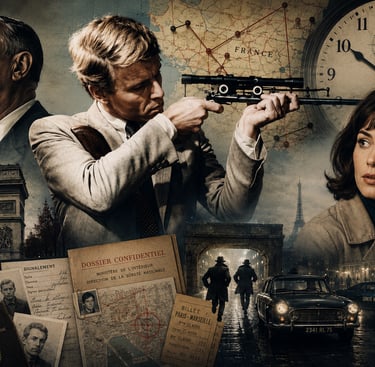
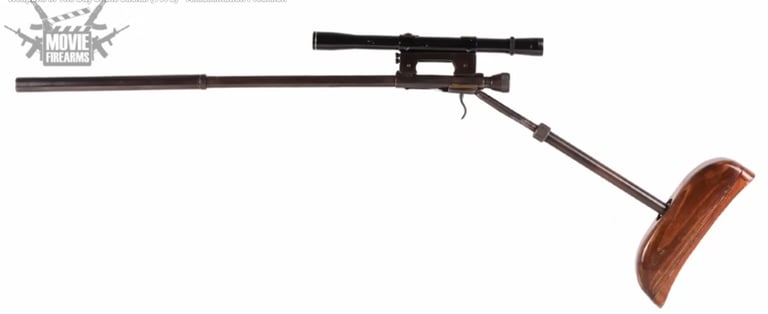
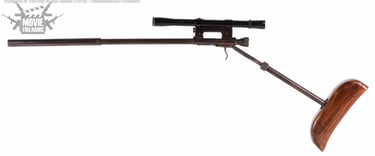
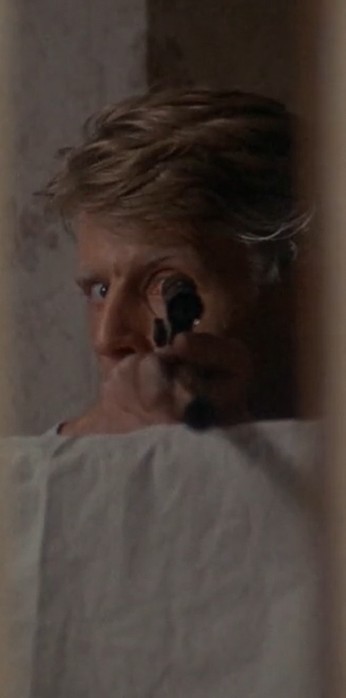
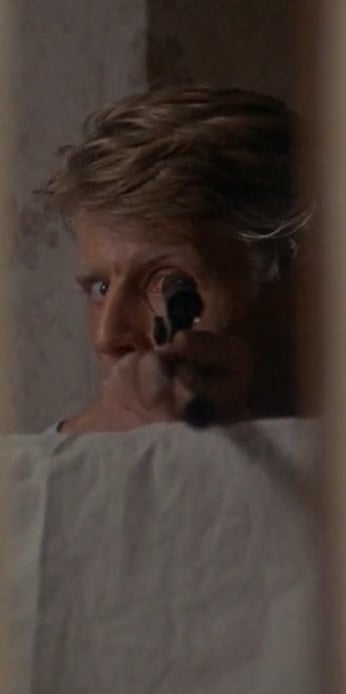
Image © MovieFirearms.com — reproduced for analysis under fair dealing.
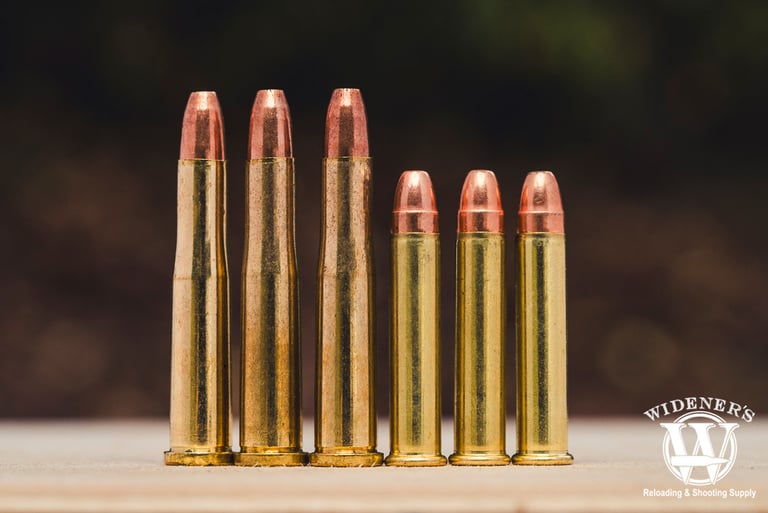
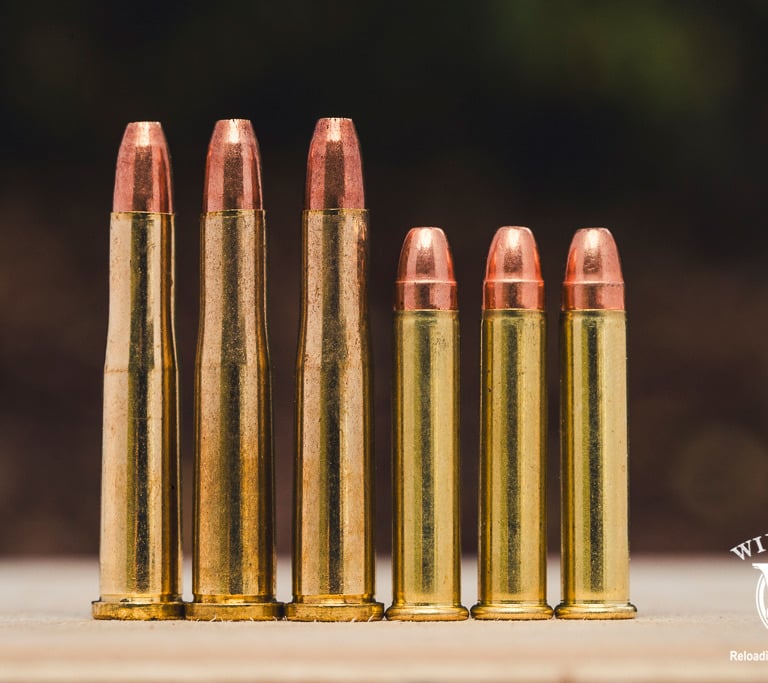
.22 Hornet vs .22 Magnum
Image © Wideners.com — reproduced for analysis under fair dealing.
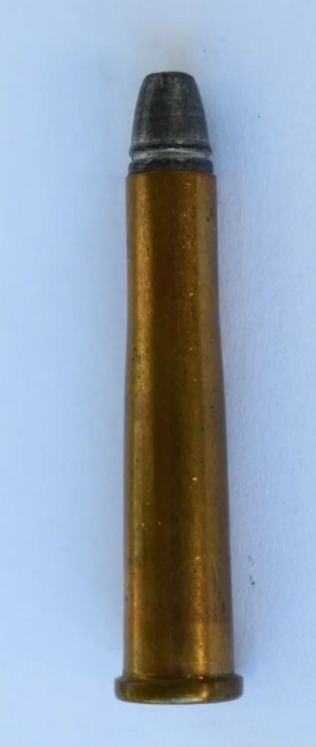
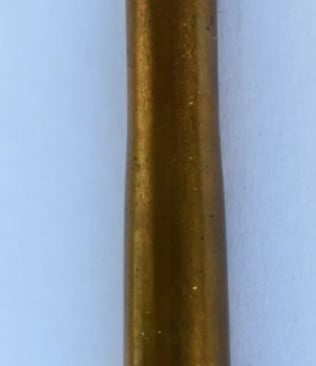
5.6×35R Vierling
Image © boepripasi.org — reproduced for analysis under fair dealing.
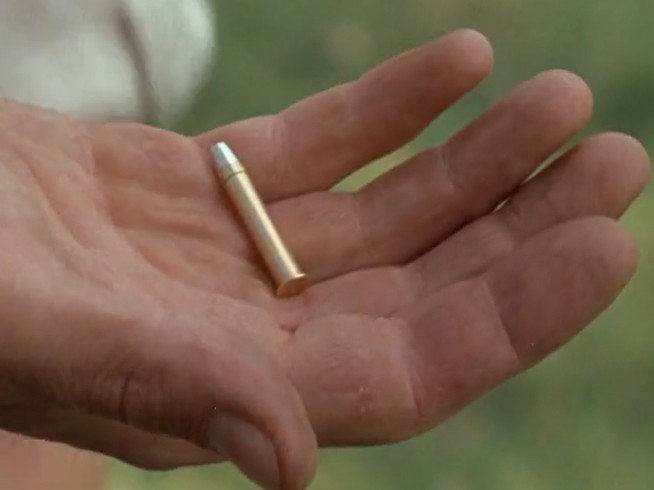
Get in touch
Note: Our Social Networks links will be available soon
Film stills appearing on A‑Z LiteraTours are reproduced solely for critical commentary and educational analysis under Canada’s fair‑dealing framework. All rights to the original works remain with their copyright owners.
Click on the image below to see Terms & Conditions:
Cinematic & Literary Travel Experiences by A‑Z LiteraTours